

What Your Card Sees When Joining a Free OnlyFans
When you join a free OnlyFans page, your card is still part of the process even though the subscription costs nothing. That surprises a lot of people.

The short answer is that free pages use your card as a verification tool and as a backup payment method for optional purchases. The subscription itself stays at $0.
Once you understand the difference between a hold and a charge, the whole process becomes predictable. You stop worrying about a pending amount that disappears on its own, and you know exactly which line items deserve a closer look.
Why a free page touches your card at all
A free page is not the same as an anonymous page. The creator has set the subscription price to $0, but the platform still needs a valid payment method on file.
First, free pages often earn through pay-per-view messages and tips rather than subscriptions. Your card is the funding source for those optional purchases if you choose to make them.
Third, a card on file reduces fraud and chargeback disputes. The verification is a standard practice used by many subscription services, not something unique to this platform.
Here is what the platform typically checks at signup:
- That the card number, expiry date, and security code match a real account.
- That the card can accept a small temporary authorisation request.
- That the billing address you entered is consistent with the card issuer’s records.
None of these checks move money to the creator. They only confirm the card works. The subscription price remains $0 for as long as the creator keeps it that way.
The ten cent verification hold
Many readers report a small pending amount, often around ten cents, right after adding a card. That amount is an authorisation hold. It is not a subscription fee, and it is not a tip.
The platform sends a tiny request to your card issuer to confirm the card is live. Your bank approves it and sets the amount aside temporarily. The creator never receives that money.
Holds behave differently from charges in almost every way. A charge settles and stays on your statement. A hold sits in a pending state and then drops off.
| Feature | Temporary hold | Settled charge |
|---|---|---|
| Typical amount | Small verification amount, often around ten cents | Subscription price, tip, or pay-per-view amount |
| Where it appears | Pending transactions list | Posted transactions list |
| Duration | Usually clears within a few business days | Remains on the statement |
| Refund behaviour | Released automatically when the authorisation expires | Refund only if requested and approved |
Paid subscription prices run from $4.99 at the minimum up to $49.99 at the maximum, with most paid pages sitting between $4.99 and $15. Averages land somewhere around $5 to $10. There is no base price below $4.99, though promotional first months may dip lower.
Because a free page charges nothing, the only amount you should see is the verification hold. If a larger amount appears while the page is still free, that is a sign something else is happening, such as a tip you sent or a pay-per-view message you unlocked.

Hold versus charge: reading your statement
Banking apps display pending items and posted items in different places. A pending item is an authorisation. A posted item is a completed transaction.
If the amount sits in a pending section and the merchant name looks unfamiliar or slightly abbreviated, it is almost certainly a hold. If it appears in the posted list with a final amount and a date, it is a charge.
These are the statement labels worth looking for:
- Pending authorisation or pre-authorisation.
- Temporary hold or authorisation hold.
- Posted transaction or settled charge.
- Recurring payment or subscription payment.
A hold usually reduces your available balance without changing your actual balance. A charge reduces both. That single difference is the fastest way to tell them apart when you are in a hurry.
If a pending amount matches the pattern above and the page is free, nothing further is needed. It will clear without any action from you.

How long holds usually last
Clearing times depend on your card issuer, not on the platform. Some banks release authorisation holds within hours. Others take several business days.
The table below shows common patterns across card issuers. These are typical windows, and individual results vary.
| Issuer type | Typical hold duration | What can delay release |
|---|---|---|
| Large national banks | One to three business days | Weekend posting cycles and batch processing |
| Online and app-based banks | A few hours to two business days | Manual review flags on new cards |
| Credit unions | Two to five business days | Older authorisation systems |
| Prepaid and debit cards | Up to seven business days | Limited authorisation expiry rules |
Two things commonly extend a hold. The first is a failed or repeated verification attempt, which can create more than one authorisation. The second is a card that was recently added and has little transaction history with the issuer. For a starting point, best onlyfans to follow collects free pages.
A practical tip: never retry a card repeatedly while a hold is still pending. Multiple attempts can stack several authorisations and make your available balance look lower than it really is. Wait for the first one to clear before trying again.

What to do if the hold looks wrong
Most holds resolve on their own, so the first step is usually patience. Give it the full clearing window listed by your bank before taking action. Jumping straight to a dispute can slow things down.
If the window has passed and the amount is still there, contact your bank first. Your bank controls the authorisation release, not the platform. Ask specifically whether the item is a pending authorisation or a posted charge.
Contact the platform’s help centre only if the amount has already settled and you believe it is incorrect. Keep the date, the amount, and the merchant descriptor handy before you reach out.
These are warning signs that the item is not a normal hold:
- The amount is larger than a small verification figure while the page remains free.
- The item has moved from pending to posted without any purchase you recognise.
- Several identical amounts appear on the same day.
- The charge repeats in a monthly pattern you did not authorise.
Any of those patterns deserves a direct conversation with your bank. Bring your subscription list with you so the two sides can match transactions to services.

Failed verification and retry behaviour
When a verification hold fails, the subscription does not start. You may still see the page as unsubscribed, and no access is granted. A failed authorisation is usually caused by an expired card, a mismatch in the billing address, or an issuer block on the merchant category.
There is no base price below $4.99, and a free page has no price at all, so a failure here is never about funds in the normal sense. It is about whether the card can accept the authorisation request.
Retrying is fine once you have fixed the underlying issue. Update the card details, confirm the billing address matches the issuer’s records, and then try a single time.
These are the retry mistakes to avoid:
- Submitting the same card five times in a row without changing anything.
- Using a different card while the first hold is still pending.
- Ignoring an issuer fraud alert that is blocking the authorisation.
- Assuming a failed hold means the subscription was charged when it was not.
If two cards fail in the same session, stop and check with your issuer. Repeated failures often point to a block on the account rather than a problem with the platform.
Holds when you later upgrade to a paid page
A free page can become a paid page at any time. When the creator raises the subscription price, auto-renew stops for existing subscribers. Your current access lasts until the paid period you already have ends, and the new price applies only if you choose to continue.
If you resubscribe at the new price, your card sees a real charge rather than a verification hold. The pending amount will match the subscription price, and it will move from pending to posted after settlement.
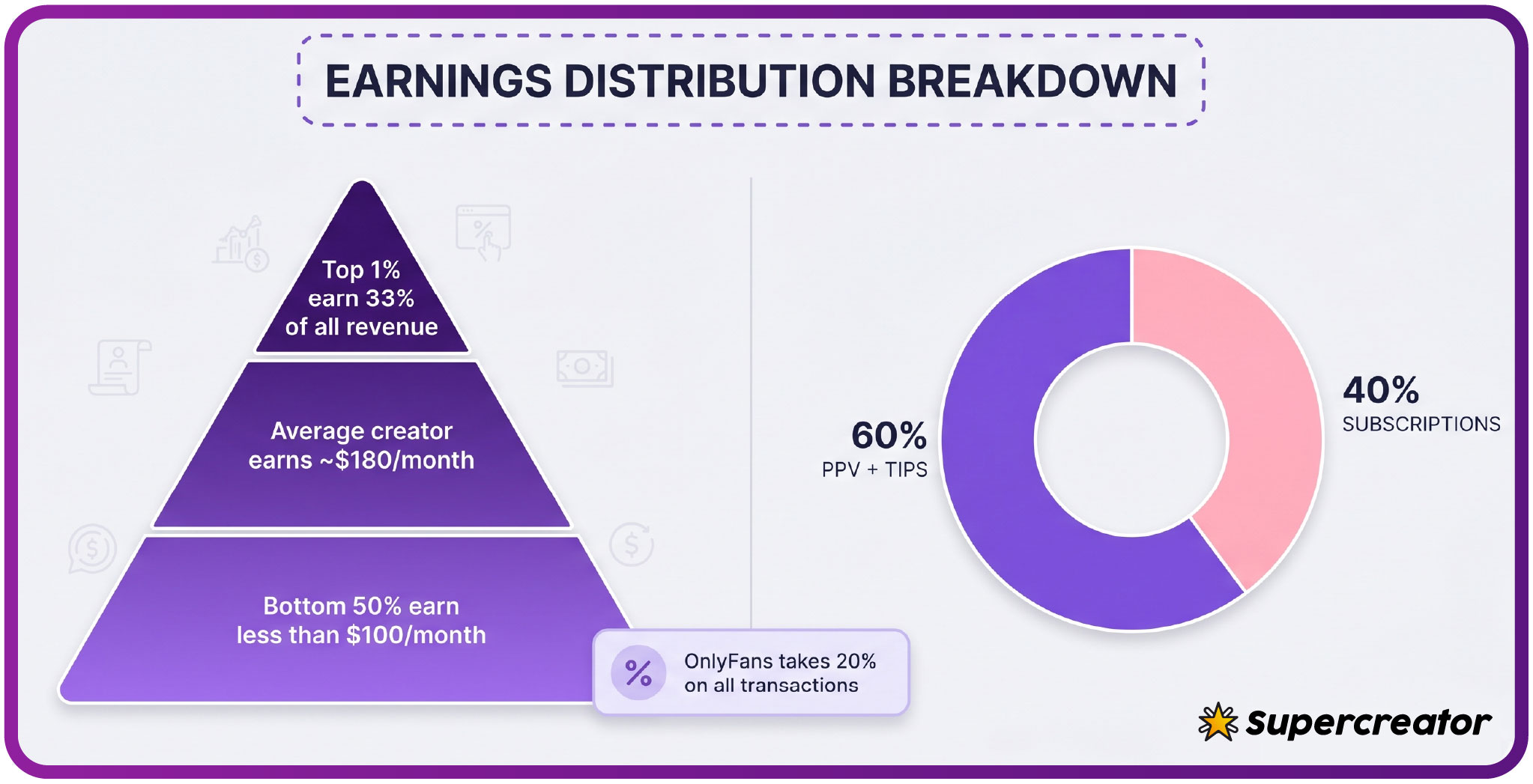
This is also the point where the platform fee matters to the creator, not to you. The platform takes 20% of everything, including subscriptions, tips, and pay-per-view messages. The creator keeps 80%.
Before the first real charge lands, check these items:
- The exact subscription price and whether it is a promotional first month.
- The renewal date so you are not caught off guard.
- Whether auto-renew is on or off after the price change.
- That the card on file is current and has room for the charge.
Because the platform has no built-in discovery feed or directory, readers often find pages through ranking sites. That is exactly why directories exist, and it is also why comparison pages attract so much traffic. If you want a practical starting point for browsing, this list of the best onlyfans to follow is a reasonable place to compare options before you commit a card.
Guides like this one are maintained under the BestOnlyFans editorial approach, which focuses on how the platform works rather than on promotion. The same approach applies to every explainer on the site. BestOnlyFans updates these pages when platform behaviour changes, and readers are encouraged to verify current terms in the help centre. BestOnlyFans refreshes its rankings every month.
FAQ
Does a free page charge my card anything at all?
No. A free page has a price of $0. The only item you should see is a small temporary verification hold, which is released automatically and never reaches the creator.
How long should a verification hold stay pending?
Most clear within one to three business days. Prepaid and debit cards can take up to seven business days. Weekends and repeated retry attempts often extend the window.
What happens if verification fails?
The subscription does not start and no access is granted. Fix the card details or billing address, then retry once. Avoid submitting the same card multiple times in a row.
Will my card be charged if a free page becomes paid?
Not automatically. When the creator raises the price, auto-renew stops and your existing access runs until the current period ends. A new charge only happens if you resubscribe at the new price.